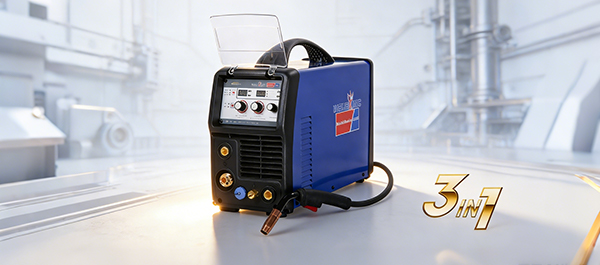
Introduction to Pulsed MIG Welding Technology
Pulsed MIG welding represents one of the most significant advancements in gas metal arc welding (GMAW) technology. Unlike conventional MIG welding that maintains a constant current output, pulsed MIG welding alternates between high peak currents and low background currents at frequencies typically ranging from 30 to 300 pulses per second. This sophisticated welding process offers unprecedented control over heat input, spatter reduction, and weld bead appearance, making it the preferred choice for professional welders working with challenging materials and applications.
The development of pulsed MIG welding technology emerged from the need to bridge the gap between short-circuit transfer and spray transfer modes. Traditional spray transfer requires high currents and voltage levels that often prove too hot for thin materials or out-of-position welding. Conversely, short-circuit transfer, while versatile, produces more spatter and can struggle with thicker materials. Pulsed MIG welding solves these limitations by delivering the benefits of spray transfer—deep penetration, low spatter, and excellent bead appearance—at much lower average heat inputs.
Modern inverter-based welding power sources have made pulsed MIG welding more accessible than ever before. What was once reserved for high-end industrial applications is now available in portable machines suitable for job sites and smaller fabrication shops. Understanding how to leverage this technology can significantly improve your welding capabilities and open doors to new applications previously considered too difficult for conventional MIG welding.
How Pulsed MIG Welding Works
The Science Behind Pulsed Transfer
Pulsed MIG welding operates on a fundamentally different principle than traditional constant voltage MIG welding. The power source rapidly switches between two distinct current levels: a high peak current that creates sufficient electromagnetic force to detach a droplet of molten metal from the wire tip, and a low background current that maintains the arc without transferring metal. This pulsing action occurs dozens or even hundreds of times per second, creating a controlled, consistent metal transfer that resembles spray transfer but at significantly reduced heat inputs.
During the peak current phase, typically lasting 1-3 milliseconds, the welding current spikes to levels high enough to form a pinching effect on the molten droplet at the wire tip. This electromagnetic pinch force, combined with plasma pressure, cleanly detaches a single droplet and propels it across the arc gap to the weld pool. The precision of this droplet transfer is remarkable—each pulse ideally transfers exactly one droplet of consistent size, resulting in exceptionally stable arc behavior.
The background current phase follows immediately after droplet detachment, dropping to a much lower level that maintains arc continuity without causing additional metal transfer. This low-current period allows the weld pool to cool slightly and solidify, preventing excessive buildup and enabling better control in out-of-position welding. The background current typically ranges from 20-50 amps, depending on the wire diameter and material being welded.
Key Parameters in Pulsed MIG Welding
Several critical parameters must be properly configured for successful pulsed MIG welding. Understanding these variables and their interactions is essential for optimizing weld quality:
- Pulse Frequency: The number of pulses per second dramatically affects weld characteristics. Lower frequencies (30-80 Hz) produce a broader, flatter bead with deeper penetration, while higher frequencies (150-300 Hz) create a narrower, more focused bead with shallower penetration. Frequency selection depends on material thickness, joint configuration, and desired bead profile.
- Peak Current and Duration: The peak current level determines droplet size and the force with which it transfers across the arc. Higher peak currents produce smaller, more forcefully propelled droplets, while lower peak currents create larger droplets with gentler transfer. Peak duration controls how long the high-current phase lasts, affecting droplet size and transfer consistency.
- Background Current: This parameter maintains the arc between pulses and influences overall heat input. Too low, and the arc may extinguish; too high, and continuous metal transfer may occur, defeating the purpose of pulsing. Background current typically represents 20-40% of peak current.
- Wire Feed Speed: In pulsed MIG welding, wire feed speed must be synchronized with pulse parameters to ensure one droplet transfers per pulse. Modern synergic welding systems automatically adjust pulse parameters based on wire feed speed, simplifying setup considerably.
Advantages of Pulsed MIG Welding
Superior Heat Control and Reduced Distortion
One of the most compelling advantages of pulsed MIG welding is its exceptional heat control capabilities. By alternating between high peak currents and low background currents, the process delivers the penetration benefits of spray transfer while maintaining average heat inputs comparable to or lower than short-circuit transfer. This characteristic proves invaluable when welding thin materials prone to warping or burn-through.
The reduced heat input translates directly to less thermal distortion in welded assemblies. Components maintain closer dimensional tolerances, reducing or eliminating the need for post-weld straightening or machining operations. For fabrication shops working with precision components, this advantage can significantly improve throughput and reduce manufacturing costs.
Heat-affected zones (HAZ) are also minimized with pulsed MIG welding. The narrower HAZ preserves more of the base metal's original mechanical properties, particularly important when welding heat-sensitive materials like high-strength steels or precipitation-hardening alloys. Reduced HAZ size also means less susceptibility to hydrogen-induced cracking in susceptible materials.
Exceptional Spatter Reduction
Spatter represents one of the most frustrating aspects of conventional MIG welding. Not only does spatter create unsightly welds requiring extensive cleanup, but it also wastes filler metal and can cause fit-up issues in precision assemblies. Pulsed MIG welding virtually eliminates spatter through its controlled droplet transfer mechanism.
Unlike short-circuit transfer, where wire contact with the weld pool creates explosive metal transfer and significant spatter, pulsed MIG welding maintains a consistent arc length throughout the process. Droplets transfer across the arc gap without short-circuiting, resulting in clean, spatter-free deposition. The reduction in cleanup time alone can justify the investment in pulsed MIG equipment for high-volume production environments.
Enhanced Out-of-Position Welding Capabilities
Welding in positions other than flat (1G/1F) presents significant challenges with conventional MIG welding processes. Gravity works against the welder, causing molten metal to sag or drip from the joint. Pulsed MIG welding addresses these challenges through its inherent cooling periods between pulses.
The background current phase allows the weld pool to freeze slightly, increasing its viscosity and resistance to sagging. This characteristic enables welders to produce quality welds in vertical up, overhead, and horizontal positions with greater ease than conventional processes. The ability to weld out-of-position without excessive manipulation techniques improves productivity and reduces operator fatigue.
Many welding codes and specifications that previously required TIG welding for critical out-of-position joints now accept pulsed MIG welding as an equivalent or superior alternative. This acceptance opens new possibilities for productivity improvements in structural steel, pressure vessel, and pipeline applications.
Applications and Materials for Pulsed MIG Welding
Aluminum Welding Excellence
Pulsed MIG welding has revolutionized aluminum fabrication. Aluminum's high thermal conductivity and low melting point make it challenging to weld with conventional processes. Pulsed MIG welding addresses these challenges by providing sufficient penetration while preventing the burn-through common with spray transfer on thin aluminum sections.
The ability to use larger diameter aluminum wire (1.2mm or 3/64" instead of 0.9mm or 1.0mm) improves feeding reliability, a common problem with soft aluminum wire. The pulsed transfer mechanism effectively reduces the apparent wire size during deposition, allowing the use of stiffer, more easily fed wire while achieving the deposition characteristics of smaller diameters.
Automotive manufacturers, boat builders, and aerospace fabricators increasingly specify pulsed MIG welding for aluminum components. The process produces bright, shiny welds with excellent cosmetic appearance while meeting stringent mechanical property requirements. The reduced heat input also minimizes the heat-affected zone, preserving the strength-to-weight advantages that make aluminum attractive for these applications.
Stainless Steel Fabrication
Stainless steel benefits tremendously from pulsed MIG welding's heat control capabilities. The process minimizes sensitization—a phenomenon where chromium carbides precipitate at grain boundaries, reducing corrosion resistance—in austenitic stainless steels. By limiting time in the critical temperature range (800-1500°F), pulsed MIG welding helps maintain the material's corrosion resistance.
Duplex and super-duplex stainless steels, increasingly used in chemical processing and offshore applications, require careful heat input control to maintain their balanced microstructure. Excessive heat input can shift the ferrite-austenite balance, reducing both strength and corrosion resistance. Pulsed MIG welding's precise heat control makes it ideal for these demanding applications.
The cosmetic appearance of stainless steel welds is often as important as their mechanical properties, particularly in architectural and food service applications. Pulsed MIG welding produces smooth, uniform beads with minimal discoloration, reducing or eliminating the need for post-weld finishing operations.
Exotic and High-Performance Alloys
Nickel-based superalloys, titanium alloys, and other high-performance materials often require pulsed MIG welding to achieve acceptable results. These materials are typically expensive and used in critical applications where weld quality cannot be compromised. The precision and control offered by pulsed transfer justify the additional equipment investment many times over.
Inconel, Hastelloy, and similar nickel alloys used in chemical processing, power generation, and aerospace applications weld beautifully with pulsed MIG welding. The process maintains the clean, oxide-free conditions necessary for these materials while providing the penetration and fusion required for code-quality welds.
Setting Up Your Pulsed MIG Welding System
Equipment Requirements
Modern pulsed MIG welding requires an inverter-based power source with pulsing capabilities. While early pulsed MIG systems were complex and expensive, today's machines offer sophisticated pulsing features at accessible price points. Look for machines that offer synergic control—where the machine automatically adjusts pulse parameters based on wire feed speed and material selection.
Wire feeders for pulsed MIG welding should provide smooth, consistent wire delivery. Any variation in wire feed speed will affect the synchronization between wire melting and pulse frequency, potentially causing erratic arc behavior. Four-roll feeders are recommended for production applications, particularly with soft wires like aluminum.
Shielding gas selection for pulsed MIG welding follows similar principles to conventional MIG welding, with argon-based mixtures being most common. For steel, argon-CO2 mixtures (typically 80-90% argon) work well. Aluminum requires pure argon or argon-helium mixtures for thicker sections. Stainless steel benefits from argon with small additions of CO2 or O2.
Parameter Development and Optimization
While synergic welding systems simplify setup, understanding how to optimize parameters for specific applications separates good welders from great ones. Start with the manufacturer's recommended settings for your material and wire diameter, then make small adjustments based on weld appearance and performance.
Listen to the arc sound—properly tuned pulsed MIG welding produces a distinctive "buzzing" or "humming" sound at the pulse frequency. Erratic popping or crackling indicates parameter issues. Visual inspection of the weld bead provides additional feedback: a properly tuned pulsed MIG weld shows uniform ripples corresponding to individual pulses, with consistent width and height along the joint.
Travel speed significantly affects pulsed MIG welding results. Too slow, and excessive heat buildup causes widening and potential burn-through. Too fast, and insufficient penetration or lack of fusion may occur. Find the sweet spot where bead appearance is consistent and penetration meets application requirements.
Troubleshooting Common Pulsed MIG Welding Issues
Inconsistent Arc or Droplet Transfer
When the arc becomes erratic or droplet transfer inconsistent, several factors may be at play. First, verify that wire feed speed is consistent and properly synchronized with pulse parameters. Check contact tip condition—worn or oversized tips cause voltage variations that disrupt pulsing. Ensure the work connection is clean and secure, as poor ground can cause arc instability.
Gas flow rate also affects pulsed MIG welding stability. Insufficient flow allows atmospheric contamination, while excessive flow creates turbulence that disrupts the arc. For most applications, 25-35 CFH provides adequate protection without turbulence issues.
Lack of Fusion or Insufficient Penetration
If welds show lack of fusion or insufficient penetration, several adjustments may help. Increasing peak current or extending peak duration provides more energy for penetration. Reducing travel speed allows more heat input per unit length. Ensuring proper joint preparation and fit-up eliminates gaps that dissipate heat.
Remember that pulsed MIG welding's lower average heat input may require technique adjustments compared to spray transfer. Joint designs that worked well with conventional processes may need modification—slightly wider root openings or reduced land thickness may be necessary to ensure complete fusion.
Excessive Convexity or Poor Bead Profile
Convex weld beads often indicate excessive heat input or improper parameter balance. Try increasing pulse frequency to narrow the bead, or reduce background current to lower overall heat input. Travel angle also affects bead profile—excessive drag angle pushes molten metal backward, creating convexity.
For vertical up welding, technique becomes even more critical. Use a slight weave pattern to control bead width and prevent excessive buildup. Pause slightly at the sides of the weave to ensure good sidewall fusion without allowing the pool to become too fluid.
Conclusion
Pulsed MIG welding represents a significant advancement in welding technology that offers tangible benefits for fabricators working with challenging materials and applications. The combination of spray transfer quality with reduced heat input opens possibilities that were previously difficult or impossible with conventional MIG welding processes.
While the initial learning curve and equipment investment may seem daunting, the returns in terms of improved weld quality, reduced rework, and expanded capabilities justify the effort for serious welding professionals. As inverter technology continues to advance and pulsing features become standard on more machines, proficiency in pulsed MIG welding will increasingly become an expected skill in the welding industry.
Whether you're welding thin aluminum body panels, critical stainless steel pressure vessels, or exotic alloys in aerospace applications, pulsed MIG welding provides the control and precision needed to produce code-quality results efficiently. Take the time to master this technology, and you'll find yourself capable of tackling welding challenges that were previously outside your comfort zone.
MIG Welding Aluminum: Tips, Settings, and Mistakes | Spray Transfer MIG Welding Mode Explained | Advanced MIG Welding Techniques for Professional Fabricators