Understanding Stick Welding Power Source Types
Stick welding power sources have evolved significantly from the heavy transformer machines of decades past to today's lightweight inverter technology. Each type of power source—transformer, rectifier, inverter, and engine-driven—offers distinct advantages and limitations that make it suitable for specific applications. Understanding these differences is essential for selecting the right machine for your welding needs.
The fundamental requirement for stick welding is a power source that delivers constant current (CC) output. Unlike MIG welding which uses constant voltage, stick welding requires the current to remain relatively stable as the arc length changes. This CC characteristic maintains arc stability when the welder varies the electrode-to-work distance during welding.
Modern power sources offer features that improve welding performance and convenience. Hot start aids arc initiation, arc force prevents electrode sticking, and adjustable parameters optimize performance for different electrodes. These features, combined with the basic power source type, determine the machine's suitability for various applications.
Transformer Power Sources
How Transformer Welders Work
Transformer power sources are the traditional, time-tested design for stick welding. These machines use a transformer to step down input voltage (230V or 460V) to welding voltage (20-80V) while increasing current to welding levels (50-500+ amps). The transformer operates on AC power and delivers AC output.
Transformer machines are simple, reliable, and durable. With minimal electronic components, they withstand harsh shop and field conditions that damage more sophisticated equipment. Many transformer welders remain in service for decades with minimal maintenance.
The main disadvantage of transformer machines is weight and size. Transformers require substantial iron and copper to handle welding currents, making these machines heavy and bulky. A 300-amp transformer welder may weigh 300-400 pounds, limiting portability.
AC vs. DC Transformer Output
Basic transformer welders deliver AC output, suitable for running AC electrodes like E6011, E6013, and E7024. AC welding works well for many applications but has limitations compared to DC.
DC transformer welders add a rectifier circuit to convert AC to DC. This allows using all electrode types including E6010 and E7018 that require DC. DC provides more stable arc characteristics and better penetration than AC.
Rectifier-type DC machines add cost and complexity but significantly expand electrode capability. Most professional welding now uses DC, making rectifier or inverter machines preferred for new purchases.
Applications for Transformer Welders
Transformer welders excel in applications where:
- Reliability and durability are paramount
- Weight and size are not concerns
- Cost is a primary factor
- Only occasional welding is needed
- AC welding is acceptable
Shop fabrication, maintenance departments, and training facilities often use transformer machines. The low cost and minimal maintenance make them economical for these applications.
For field work, construction, or portable applications, transformer machines are generally too heavy. Inverter or engine-driven machines are better choices when portability is needed.
Inverter Power Sources
Inverter Technology Advantages
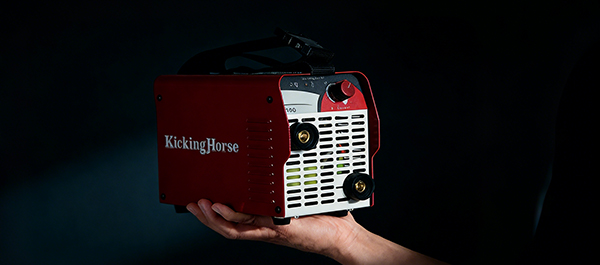
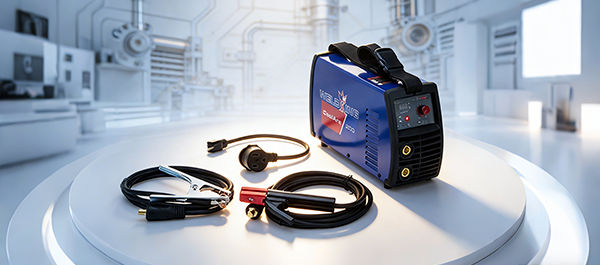
Inverter power sources represent the modern standard for stick welding. These machines use electronic switching to convert input power to high frequency, then transform and rectify it to welding current. This approach dramatically reduces size and weight while improving performance.
A 300-amp inverter welder typically weighs 40-60 pounds compared to 300-400 pounds for an equivalent transformer machine. This portability makes inverters ideal for field work, construction, and applications where the machine must be moved frequently.
Inverters offer superior arc characteristics through precise electronic control. Features like hot start, arc force, and pulse welding are easily implemented. Some machines store multiple welding programs for different electrodes and applications.
Inverter Features and Benefits
Hot Start: Automatically increases current at arc initiation to prevent sticking and improve starting, especially with E7018 electrodes that can be difficult to start.
Arc Force (Dig): Increases current when the arc shortens, preventing electrode sticking and improving penetration. Adjustable arc force allows optimization for different electrodes and applications.
Anti-Stick: Automatically reduces current if the electrode sticks, allowing easy release without damaging the electrode or workpiece.
Power Factor Correction: Improves electrical efficiency and allows operation on smaller input circuits. Some high-power inverters can run on standard 230V single-phase input.
Multi-Process Capability: Many inverter machines also support TIG and MIG welding, providing versatility for shops that perform multiple processes.
Selecting Inverter Welders
When selecting an inverter welder, consider:
- Output range: Ensure the machine covers your amperage needs with margin for growth
- Duty cycle: Higher duty cycles allow longer welding at rated output
- Input power: Verify your electrical service can support the machine
- Portability: Weight and handle design affect field usability
- Features: Determine which features justify additional cost
- Brand and support: Choose established manufacturers with service availability
Quality inverter welders range from $500 for basic 200-amp machines to $3,000+ for professional 400-amp units with full features.
Engine-Driven Welding Generators
Applications for Engine-Driven Welders
Engine-driven welding generators provide portable welding power where electrical service is unavailable. These self-contained units are essential for:
- Construction sites without power
- Pipeline welding in remote locations
- Farm and ranch maintenance
- Emergency repair work
- Field service applications
Engine-driven welders combine a gasoline, diesel, or propane engine with a welding generator. The engine drives the generator that produces welding current. Most units also provide auxiliary power for tools and lights.
Engine and Generator Specifications
Engine size determines welding output and auxiliary power capacity. Larger engines provide more welding current and auxiliary power but consume more fuel and cost more.
Common engine types:
- Gasoline: Lower cost, lighter weight, suitable for intermittent use
- Diesel: Better fuel economy, longer life, preferred for continuous duty
- Propane: Clean burning, good for enclosed spaces, fuel storage considerations
Generator design affects welding characteristics. Traditional generators produce AC that is rectified for DC welding. Alternator-type machines provide better arc characteristics and auxiliary power quality.
Selecting Engine-Driven Welders
Key selection factors:
- Welding output: Sufficient amperage for your electrodes and applications
- Duty cycle: 100% duty cycle for continuous production welding
- Fuel type: Gasoline for light use, diesel for heavy production
- Auxiliary power: Wattage for tools and equipment you'll operate
- Portability: Weight, trailer mounting, lifting points
- Noise: Sound levels for the work environment
- Runtime: Fuel tank capacity for your typical work duration
Engine-driven welders range from $2,000 for small gasoline units to $15,000+ for large diesel pipeline machines.
Multi-Process Power Sources
Benefits of Multi-Process Machines
Multi-process power sources perform stick welding plus other processes—typically MIG and TIG. These versatile machines are valuable for:
- Shops with varied welding needs
- Field service requiring multiple processes
- Training facilities teaching multiple processes
- Operations wanting to minimize equipment inventory
A single multi-process machine can replace two or three dedicated machines, saving space and capital investment. However, the complexity increases and switching between processes takes time.
Multi-Process Considerations
When evaluating multi-process machines:
- Verify that each process meets your performance requirements
- Check the cost and availability of accessories (MIG feeders, TIG torches)
- Consider how often you'll switch processes
- Evaluate whether dedicated machines might be more efficient for high-volume work
For shops doing primarily stick welding with occasional TIG or MIG, a multi-process machine makes sense. For high-volume production of one process, dedicated machines are usually more efficient.
Power Source Selection Guidelines
Shop Fabrication Applications
For shop fabrication with electrical service available:
- Light fabrication (under 200A): Inverter machines offer good value and features
- Heavy fabrication (200-400A): Inverter or rectifier machines depending on budget
- Production welding: High-duty-cycle inverters or rectifiers
- Multi-process needs: Consider multi-process inverters
Shop machines can prioritize features and arc quality over portability. Fixed installation with proper electrical service allows using maximum capability machines.
Field and Construction Applications
For field work without reliable power:
- Light field work: Portable inverter with generator or small engine-driven
- Pipeline and heavy construction: Diesel engine-driven welders
- Maintenance and repair: Portable inverter machines
- Remote locations: Self-contained engine-driven units
Field machines must balance portability against output. Lighter machines are easier to transport but may have lower output or duty cycle.
Budget Considerations
Welding power source prices vary widely:
- Basic transformer AC: $200-400
- Transformer DC rectifier: $500-1,500
- Basic inverter (200A): $400-800
- Professional inverter (300A): $1,000-2,500
- Premium inverter (400A+): $2,500-5,000
- Gasoline engine-driven: $2,000-5,000
- Diesel engine-driven: $5,000-15,000+
Consider total cost of ownership including:
- Electrical installation (for shop machines)
- Consumables and maintenance
- Fuel (for engine-driven)
- Expected service life
- Productivity improvements from better arc characteristics