Robots for the Rest of Us: Why Welding Automation Is No Longer Just for Mega Manufacturers
Not long ago, welding automation was primarily associated with large manufacturers and high-volume production lines. Installing robotic welding systems required major capital investment, extensive engineering support, and production volumes large enough to justify the expense. For many fabrication shops, automation simply wasn't practical. Now, the conversation is shifting.
Companies are no longer asking whether an entire production line should be automated. Instead, they're asking a more practical question: where can automation provide the most value?
How Fabrication Shops Are Getting Started
This shift is being driven by a mix of pressures and opportunities. Skilled labor remains hard to find, lead times keep shrinking, and customers expect consistent quality. At the same time, today's welding robots are easier to program, safer to operate, and far more flexible than earlier generations.
The result is a new kind of automation conversation — one focused less on replacing people and more on helping teams produce more with their existing staff.
Many shops are discovering that automated welding doesn't have to start with a fully automated line. It can begin with a single robotic welding cell tackling the most repetitive, high-volume parts. Others start by automating material handling, fixturing, or part positioning to stabilize the process before adding the robot.
In both cases, success tends to come from a clear plan: choose the right parts, define quality targets, build repeatable setups, and train operators to run and maintain the system with confidence.
A New Generation of Flexible Automation
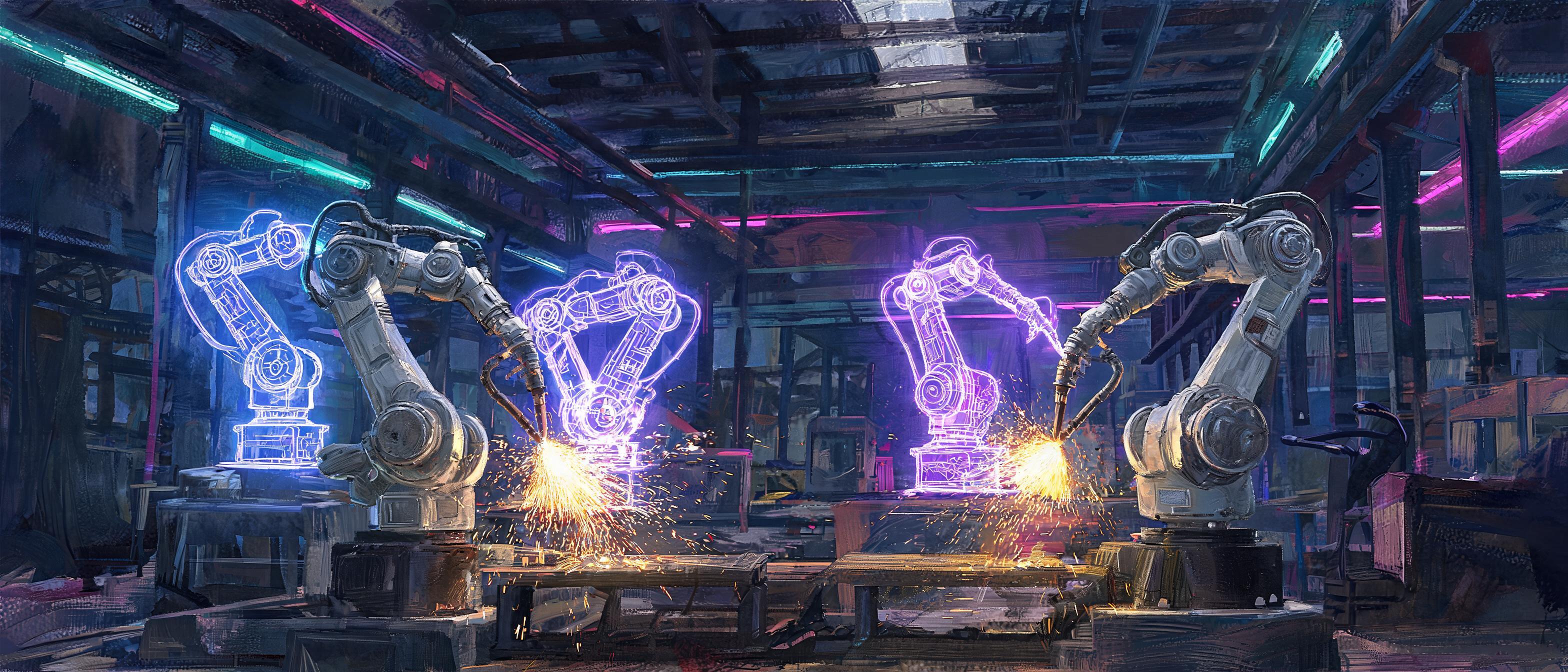
Today's robotic welding solutions are increasingly designed with flexibility in mind, and this flexibility is changing the automation conversation. Collaborative robots — often called cobots — along with modular cells, and simplified programming interfaces are allowing shops to automate specific processes without completely redesigning their production environment.
In some cases, the answer may be a single repetitive weld performed hundreds of times per shift. In others, it may be a small automation cell that supports multiple product runs with minimal changeover.
In either case, implementing welding automation requires careful planning and process knowledge, including fit-up quality, fixturing, and weld parameter control. By handling repetitive or ergonomically challenging tasks, robotic welding systems can free a company's skilled welders to focus on more complex fabrication work that requires judgment and experience.
For decision-makers who are still evaluating their first step, the message is simple: automation is no longer an all-or-nothing leap. With the right expectations and a realistic roadmap, even smaller teams can put robotics to work and see meaningful gains — without losing the craftsmanship that makes their work valuable.
Solving Real Shop-Floor Challenges
The Welding Automation Expo and Conference being held from June 2-4, 2026, in New Orleans, LA, highlights what makes welding automation projects work in the real world.
Manufacturers, engineers, fabricators and robotic welding experts gather to compare different integration approaches, from turnkey systems to in-house builds, and to share their practical insights into automation adoption, technology integration, and lessons learned from real-world applications.
Sessions cover topics such as robotic welding integration, automation strategies for small and mid-size shops, and lessons learned from companies that have successfully implemented welding automation. Attendees also discuss common hurdles — part variation, fit-up issues, and changeovers — and the practical ways shops overcome them.
Just as important, these conversations examine how companies measure return on investment beyond simple arc-on time, including reduced rework, improved throughput, better ergonomics, and more predictable scheduling.
For companies exploring their first steps into automation, the Welding Automation Expo & Conference offers a chance to see how others are approaching the same challenges — and what's working on real shop floors today.