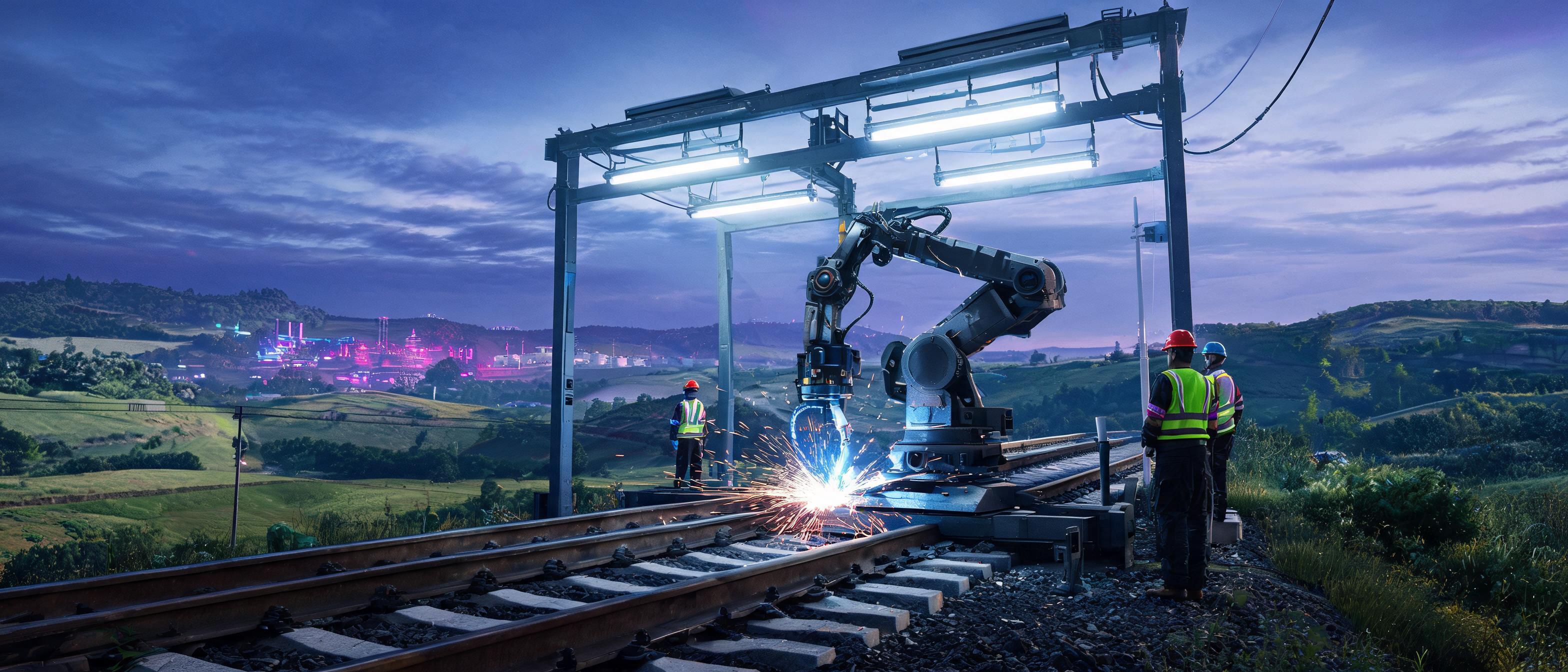
What is shaping welding automation, and how is Pemamek helping customers get ahead? Welding automation is evolving fast. From AI-driven adaptive welding to data-first service models and digital twins, manufacturers must move from isolated robot cells to connected, learning systems. At Pemamek, we build heavy-duty automation, and we’re shaping how these trends become practical, ROI-generating solutions on the shop floor.
Adaptive welding and closed-loop control utilize sensors and machine learning to adjust welding parameters in real-time, reducing rework, enhancing first-pass yield, and making complex joints more automatable.
Lack of welders when it comes to both work force and skills is the main driver for manufacturers to turn toward automation systems. Other drivers include rising quality demands, stricter tolerances, and the need to minimize scrap. Improvements in sensors, computing power, and industrial AI libraries have made adaptive algorithms practical outside labs. For heavy fabrication, every rework hour is expensive. Adaptive welding means fewer rejects, faster ramp-up on new parts, and more consistent output across shifts and sites. It creates the possibility to apply automation to cases where it has not been feasible before.
Pemamek’s role: Pemamek brings automated welding into production through adaptive software and operator-focused robot interfaces, enabling skilled welders to transition into robot operators. We support customers with training delivered by Pemamek experts and lifecycle service agreements that keep software, process models, and operator skills up to date. This ensures stable adaptive performance over time while reducing risk and protecting the automation investment.
Digital twins, virtual commissioning, and offline simulation allow integrators to fully validate robot trajectories, tooling, and PLC logic before hardware reaches the site. Remote factory acceptance testing (FAT) is increasingly feasible.
Global projects, travel costs, and the desire to shorten on-site commissioning windows make pre-validation attractive. Project teams can discover clashes, optimize cycles and reduce unexpected delays. Faster, safer start-ups mean earlier production, lower installation risk and lower total cost of project ownership for large cells and systems.
Pemamek’s role: We combine virtual commissioning and digital twin workflows with our standard engineering process to shorten lead times and reduce on-site surprises. We offer remote FAT, staged virtual acceptance, and structured handover packages so customers get faster time to production and predictable project outcomes.
Laser-arc hybrid welding is moving from high-precision work into heavier applications where travel speed, low heat input, minimal number of passes, and minimal distortion matter. Hybrid processes can combine the penetration of laser with the fill and robustness of arc.
Customers want faster production lead times with less rework and distortion, especially in industries like wind, shipbuilding, and structural steel. Improved safety systems also make adoption practical. Laser and hybrid methods open opportunities for narrower heat-affected zones (HAZ), faster travel speeds, and new joint designs that were previously too risky or slow for heavy fabricators. This reduces post-weld work and improves final product dimensional accuracy and performance
Pemamek’s role: We support laser and hybrid integrations by offering modular cells and retrofit paths, combining our heavy-duty fixtures, motion systems, and safety platforms with laser-ready interfaces. Our service teams are trained in safe integration and lifecycle support so customers can adopt laser capabilities without rebuilding their entire line. Pemamek also offers various process services executed by certified PEMA welding engineers. These services include, for example, analysis, ramp-up time & pre-study services, production support services, and welding tests with the customer’s material & requirements.
Manufacturers are increasingly buying outcomes: uptime, throughput, and predictable quality, not just machines. Predictive maintenance, remote monitoring, and spare-parts subscription models turn service into a strategic, recurring revenue stream.
Tight margins, global supply chains, and the high cost of downtime push customers toward partners who can guarantee availability and optimize parts inventory. Advances in IoT and analytics make meaningful predictive services possible. For heavy automation, even a single day of unexpected downtime can be hugely costly. Data-driven service agreements transform Pemamek systems from capital equipment into managed production assets with measurable KPIs.
Pemamek’s role: We are a lifecycle partner with service offering everything from reactive support to fully managed predictive maintenance, combined with remote diagnostics and spare-parts planning. These offerings let customers trade unpredictable repair costs for transparent service levels and predictable productivity.
The skilled welder shortage and the need for digital-savvy operators are reframing workforce strategies also in the upcoming years. Roles are shifting toward automation supervision, maintenance and process management.
Demographics, talent competition, and the increasing complexity of automated systems require companies to invest in training, remote support, and intuitive interfaces. Adoption stalls if the workforce can’t operate and maintain new systems. Customer ROI depends on how quickly teams can run new lines and maintain quality. Investing in operator training and in-service learning minimizes ramp times and protects production.
Pemamek’s role: Pemamek delivers turnkey training and certification programs using a digital training platform combined with on-site and remote training. This enables structured onboarding, continuous skill development, and easy repetition after initial training is completed. Our service managers deliver structured handovers, practical operator curricula, and remote coaching, ensuring technology adoption translates into production performance.
The future of welding automation is less about isolated robot cells and more about connected, intelligent systems that deliver measurable outcomes: less rework, faster ramp-up, higher uptime, and lower total cost of ownership. For heavy manufacturers, this is an opportunity to convert automation investments into predictable production capability.
If you’re planning automation or looking to modernize existing lines, start by asking:
- Can this cell adapt to part and process variation in real time?
- Is virtual commissioning able to cut our on-site start-up time?
- Would hybrid or laser welding reduce distortion and post-processing?
- How can we convert spare parts and service into predictable uptime?
- What training will our team need to run and maintain the new system?